
Hazard perception

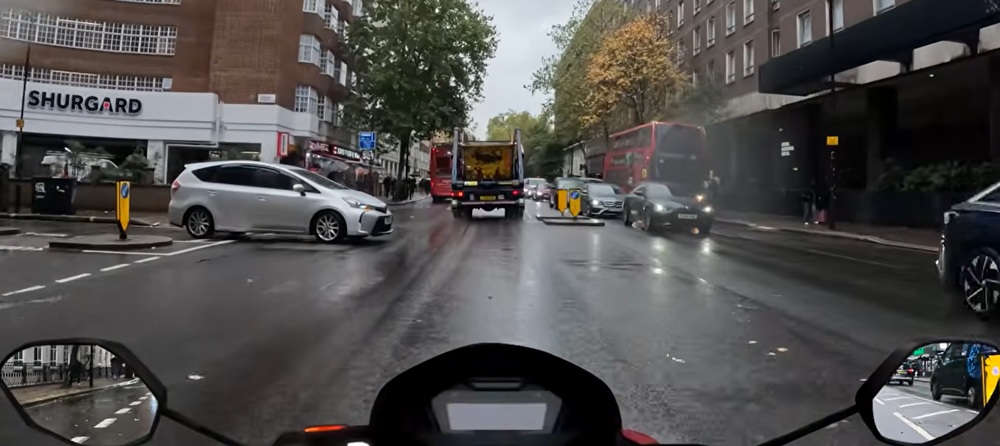
You can't predict the future. But you can get pretty good at spotting what's about to happen.
Every ride is full of clues.
A car waiting at a junction. A van blocking your view. A pedestrian looking over their shoulder. Brake lights appearing further up the road.
None of these things is necessarily dangerous on its own. But they can give you clues about what might happen next.
That's hazard perception.
It's not about having lightning-fast reactions. It's about spotting potential hazards early, giving yourself more time and making better decisions.
What should you look for?
When you're riding, keep asking yourself:
What might happen next?
Look for changes in:
- Other road users – are they slowing, moving or looking somewhere else?
- Your view – could something be hidden behind a vehicle, hedge or building?
- The road – are there potholes, gravel, wet leaves or other changes in the surface?
- The traffic around you – could someone pull out, change lane or move into your path?
The earlier you spot a clue, the more time you have to respond.
Sometimes that might mean easing off the throttle. Sometimes changing your road position, increasing your space or deciding not to filter.
Watch. Think. Spot the hazard.
The best way to build your hazard perception is to practise.
The videos below show situations you might encounter on the road. As you watch, don't just wait for the hazard to happen.
Look at what happens before it.
Ask yourself:
- What was the first clue?
- When did the situation start to develop?
- What might happen next?
- Would I change my speed or position?
There isn't always one obvious answer. The aim is to get better at spotting developing hazards before they become emergencies.
Hazard perception scenarios
🚦 Junctions
A vehicle waiting at a junction might not be a hazard – yet. Look for clues such as the vehicle creeping forwards, its wheels turning or the driver looking for a gap in traffic.
👀 Restricted visibility
If you can't see what's ahead, you can't know what's there. Large vehicles, parked cars, bends and buildings can all hide potential hazards.
Ask yourself:
What can't I see?
🚗 Other road users
Small changes in someone's behaviour can give you an early warning. A driver drifting across their lane, a pedestrian looking over their shoulder or a cyclist checking behind them could all be clues.
🏍️ Filtering
When filtering, don't just watch the gap you're riding through. Watch the vehicles and people around it. A driver could change lane, a door could open or a pedestrian could appear between stationary vehicles.
And remember: just because you can filter doesn't mean you always should.
🛣️ The road itself
Hazards aren't always other people. Potholes, gravel, wet leaves, diesel spills and drain covers can all affect a motorcycle.
Looking further ahead gives you more time to adjust your speed and position smoothly.
Keep building the skill
Hazard perception develops through experience and practice.
The more situations you see, the more familiar the warning signs become. Hazard perception clips let you experience developing hazards in a safe environment and build your mental library of situations before you encounter them on the road.
This isn't just about passing a test.
It's a skill you'll use every time you ride.